
From a 2021 twitter thread
Summer reminder, since many are heading out into the national parks and federal lands:
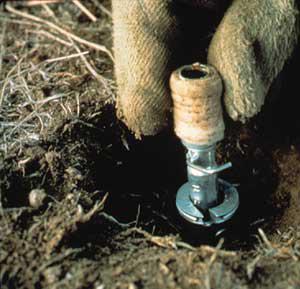
Be VERY careful with anything that looks like a sprinkler head or trash in the ground – it could easily be an M44 cyanide device. It can kill humans and dogs.
Our tax dollars pay for this poison.
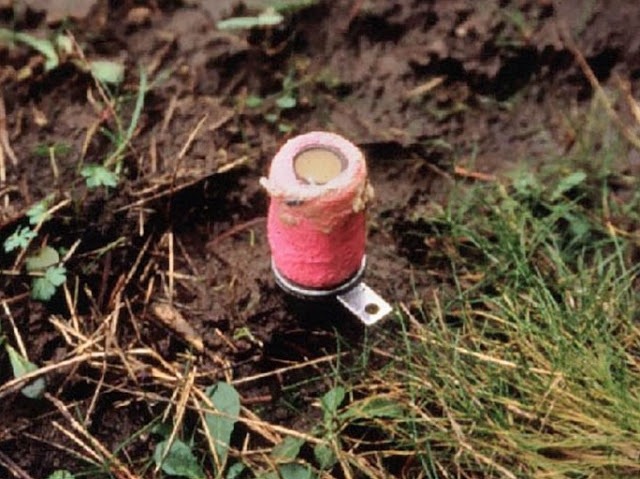

Not only do these devices kill and maim humans and dogs, they are absolutely counterproductive for their intended “canid control” purpose. When stable coyote populations experience a sudden disruption, new coyotes who don’t know the local rules move in and have larger litters.
The previously stable population of coyotes were a third line buffer between herds of livestock and transient coyotes.
When that stable relationship is disrupted, predation of livestock goes drastically up. And unstable predator populations are always more aggressive.
But public land ranchers are whiny & do not treat their herds well (by bringing them in for lambing/calving), so blame all livestock deaths on wolves/coyotes. (This simply isn’t true.)
They overstate livestock deaths by orders of magnitude.
The ranchers are WHY M44s exist.
M44s are not mapped or picked up; they’re just permanent landmines of cyanide.
So: take care with anything that looks artificial in the ground.
Keep your dogs on leash and reeled in, especially in range land.
Amyl nitrite (poppers) is the immediate antidote to cyanide; it can buy you time. It’s about the only good reason to have a bottle of poppers. That said, it’s not the best antidote, and all it does is buy time to get someone to the emergency room. It is no longer recommended for EMTs or professionals, and they are equipped with much better rescue meds, but if you’re out in public lands, you’re also often an hour or more from the nearest ER or ambulance, so having a bottle of poppers may be the difference between living to see the ER or not. Obvious caveat: use at your own risk.
Long-term: write your federal & state reps about permanently banning them. (There is supposed to be a limit, but it’s… not enough.)
Write to your nearest Bureau of Land Management office & object to them.
Read Christopher Ketcham (This Land; part II, The Betrayal) & his sources.
And don’t forget: Ranchers lie.
They are not feeding the world. They produce less than 2% of the US annual beef production and none of the dairy. They are charged $1.35 (one dollar & 35 cents) per cow & calf pair or per 5 sheep per month.
We don’t need them; they mooch off us.
Places to worry most about — these are the states with the most unintentional animal deaths. Which mostly happen where populations and wildlands intersect.
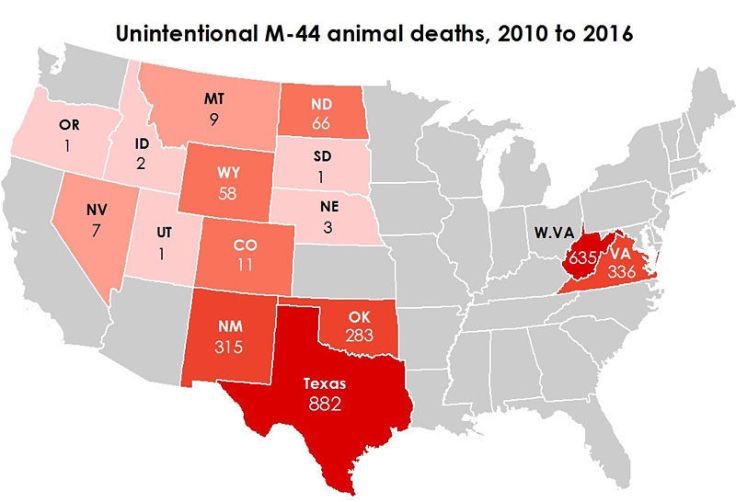
Source: Center for Biological Diversity
What (the few) warning signs will look like, IF they’re posted. They are NOT large. It’s very easy to walk past one and never see it.
Warning signs are usually no larger than 8 inches x 10 inches; these are in the 5×7 range. Think snapshot. Tall one is about 6”x15”.
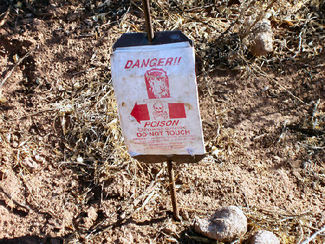
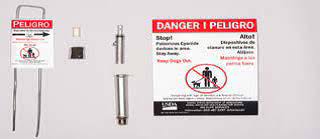
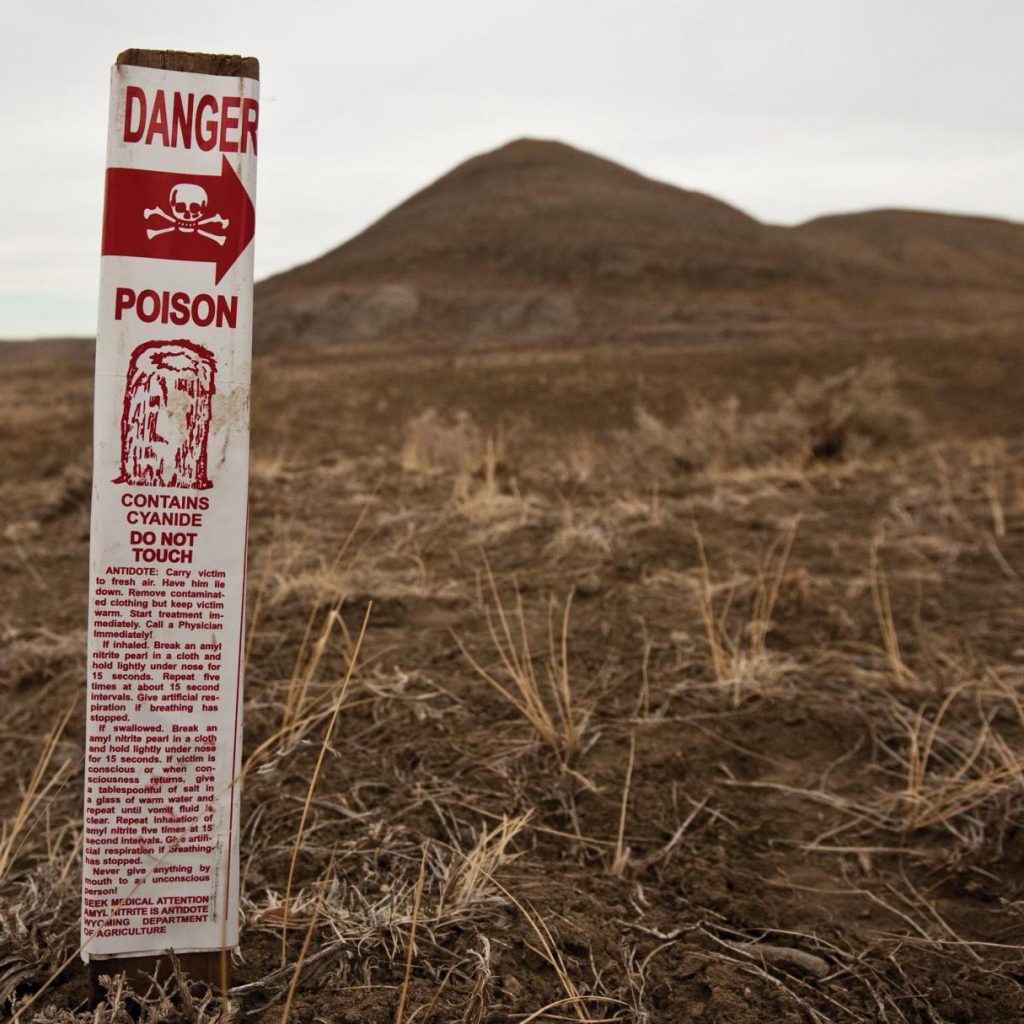
Unless you have a respirator and a haz-mat suit and a golf club and a tarp/thick plastic sheeting with you, please do not try to defuse these. (If you have all of those in your day pack, put on your suit and airway protection, put the tarp over the M44, weigh down the edges with stones or dirt, and smack the M44 with the golf club until you hear it pop, and walk away. But don’t try without serious chemical protection. These will kill humans, too.)
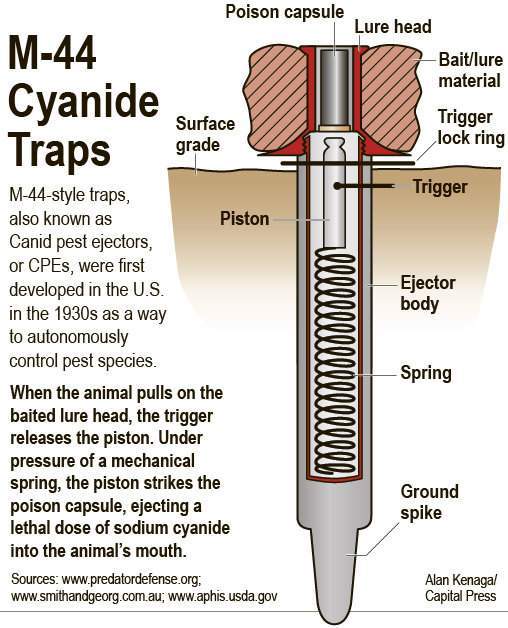
Notes: Alt Text on M44 drawing
M-44-style traps, also known as Piston Canid pest ejectors, or CPEs, were first developed in the U.S. in the 1930s as a way to autonomously control pest species.
When the animal pulls on the baited lure head, the trigger releases the piston. Under pressure of a mechanical spring, the piston strikes the poison capsule, ejecting a lethal dose of sodium cyanide into the animal’s mouth.
Sources: http://www.predatordefense.org;

Be First to Comment