
The machine and cabinet are only about half of sewing. It really is fabric origami with occasional thread staples.
Sewing is not mostly sewing — it’s primarily cutting, fitting, and pressing. And yes, pressing is absolutely necessary. Don’t be younger me who thought pressing everything was being persnickety and fussy. It is persnickety, the same way that the difference between a crepe and a pancake is persnickety attention to detail. Pressing a seam sets the thread (makes it part of the fabric of the garment) and that stabilizes the seam.
So you will need a handy iron that doesn’t turn itself off every 30 seconds. I am iffy on most modern irons because they do turn themselves off every 30 seconds, but I also DO NOT recommend vintage irons because while their build quality is amazing, they are lacking in safety features like an auto-off timer and a tip sensor. For the same reason classic cars are lovely to look at and should not be driven, vintage irons are pretty, but essentially unsafe.
I personally recommend the Oliso Smart Iron; I’ve had mine now for 6 years, it still works great which has not been true for the equally expensive brand name (rhymes with polenta) irons that the Oliso replaced, and it is SAFE. It’s not cheap, but it’s worth the money to not burn your ironing board, your fabric, or set your house on fire because you forgot it.
Empty your iron’s reservoir after use. I do have to say this because apparently it’s not universal. Empty your iron. Adding 2 oz of water tomorrow is not going to break your leg or your budget. If your iron is hard to fill, get a lab wash bottle like this:
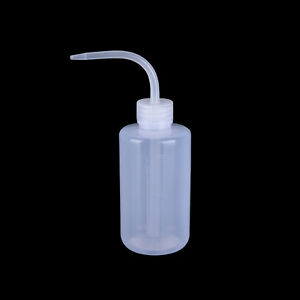
And you’ll need a board for it. This can be a door hanging ironing board that folds up when not in use:
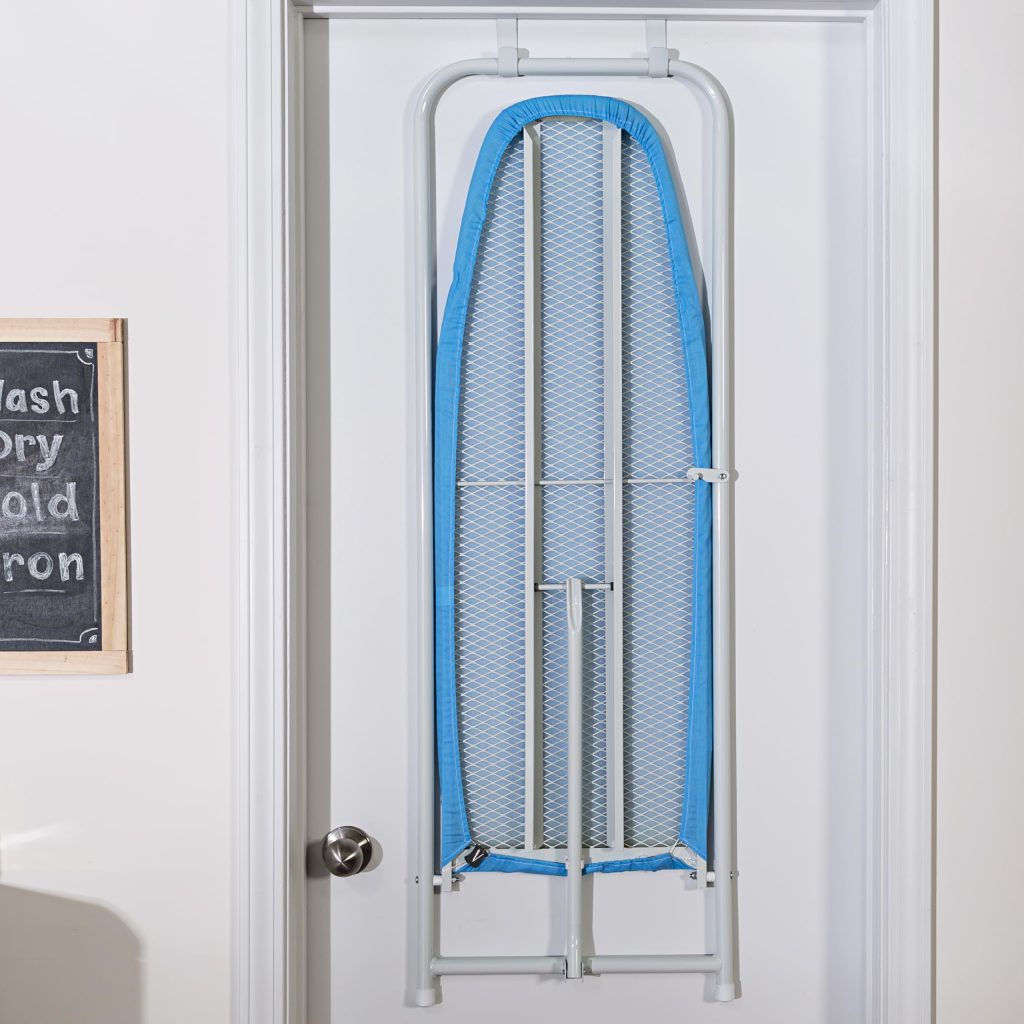
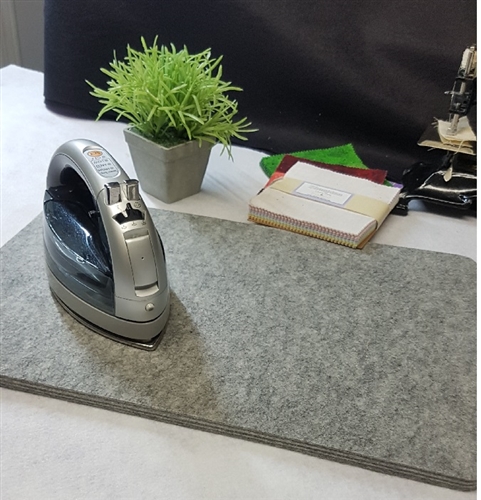
Or a standard one, or you can get a plank of wood (wood cutting board works) and a wool felt mat and use that if you’re doing mostly very small work. Wool felts come in a lot of sizes, and wool felt is the perfect ironing surface because it regulates heat and moisture very, very well. Real wool, though; most craft store felt has zero wool content. I do NOT recommend the notions vendor that is an ethnic slur. These are the ones I use.
And you’ll also need a place to lay out fabric and cut. That is the really intensive space hog, but you only need it occasionally. If you are really, really tight on space, my personal recommendation is to consult with your local library and reserve a conference room with a big table, and do a bulk cutting day. (Don’t forget a self-healing mat if you want to use a rotary cutter, but scissors are safe on tabletops.) Remember to take chalk or another way of marking each piece, and gallon+ zip-top bags to keep all of the garment pieces together. If you have a makerspace nearby, they may also have a large cutting table, but libraries are pretty reliable about having some reservable spaces. Alternately, consult your church if you have one, or other community resource. Some fabric shops even have cutting/craft spaces they’ll rent by the hour.
I don’t recommend cutting on the kitchen table. It’s a good way to stain your fabric, and it deprives the other members of your household from using the kitchen table, and it’s really easy to get distracted in the middle, then it’s 6:45, nobody’s eaten, and there’s a mess that has to be cleaned up even before a pizza can be set out. I truly think it’s better to go elsewhere and cut a lot of pieces for 3 hours than to try to squeeze it around the work of a household. YMMV with little kids, but the other parent also needs alone time with them, and the primary parent needs alone time without them. I’m firm on this. Adults who don’t get time to themselves get squirrelly and are more prone to situational mental illnesses that can be at least ameliorated if not prevented by being allowed to be an adult without a child. Children are amazing. They’re also a very tough job that needs time off.
(And sotto voce, if their other parent is being resistant, it’s perfectly reasonable to remind them that the courts are happy to enforce equitable parenting arrangements, and that divorce really is the last, best, final means of creating parental equality. The other parent needs to be reminded that expecting one parent to do most of the childrearing is a dramatically unfair and unacceptable way to be a partner, and it’s unkind and unfair to the children.)
Plus, kitchen tables are low, and your back will hurt.
I also don’t recommend cutting on the floor, or on a bed. Too easy to get injured, too easy to get distracted. (I have a piece of metal from a needle in one knee that will be there forever because I was sewing on the floor and knelt on my basting needle. I don’t suggest it.)
Personally, I use a repurposed kitchen island that’s 2 feet by 4 feet. I have a pair of former tabletops that are 28×33 each, and can be laid out on the kitchen island as a 56×33 surface for big pieces, but also fold up to 2 inches thick and can hide when not in use. But that is also a dedicated room item, not an item that’s part of the communal living space.
I’ve seen people sew in their laundry rooms, and use the tops of their machines as a cutting space. I think this is a GREAT idea if your machines are built (front loaders with controls on the front) to allow that and you’re tall enough. You can put a countertop above them and get to work.
You will need a place for the stuff of sewing. This can be as minimal as a single tote or a chest where you keep everything. This does require discipline — you cannot have a stash of fabric if everything goes in the tote when you’re not working. On the other hand, you get to shop more.
The middle compromise can also be a bookcase where your fabric, books, patterns, and tools live; adding a second IVAR (as recommended in the previous article) is still only 62 inches of wall space by 12 inches deep by however tall you can manage.
Patterns are their own special hell of storage. Digital patterns take up nothing but hard drive (or cloud) space, you can have them printed online and mailed to you (the economical choice). I like Pattern Printers because they use a lighter weight paper that’s sturdier than tissue but more translucent than copier paper, and charge $2.50 a page. You can also find a local print shop, but be warned, they’re charging upwards of $6 a sheet in most metros (and as much as $10 per sheet) and are often really bad at it (they rarely get the scale right the first time) because they don’t care and don’t know what they’re doing.
You can also buy printed patterns and trace off, or just use them and buy a new one when it’s needed. These are all storage nightmares in different ways, so it’s a matter of picking the poison you’re willing to grow a tolerance to. A two drawer filing cabinet is often a good start for keeping patterns organized if you’re not using a bookcase.
The new thing does require a dedicated space, but it’s also a really good option — projector patterns. I have been dabbling in this, there are parts I find incredibly frustrating (calibration! Messing with the patterns in a pdf cracker!) but also, it’s a lot less storage, and there is a really good, system agnostic app that has made a lot of my frustrations go away — Pattern Projector. I’ll talk about pattern projection and projectors in another post, but if you’re really tight on storage, it’s probably the smart move with some caveats.
All of this hardware takes electricity unless you’re using a treadle machine (and more power to you if you are, that’s another post, too). And even in the best built houses, there are rarely enough outlets on every wall in every room for this, so you will need a power strip. If possible, mount it to the wall in a dedicated space, including with a living room vintage cabinet, and don’t mount it out of sight, mount it where you can flick the switch, because every iron and sewing machine should be disconnected from electricity when not in use, and turning off the surge protector is the easiest way to do that. Don’t share this power strip with other devices. If only because irons are big electricity gulpers, so an iron and a sewing machine are often pushing the power strip’s capacity to begin with.
Also, write down the date any power strip/surge protector went into service ON THE STRIP, then open up your electronic calendar on your phone, and 5 years from the date it goes into service, note that it’s time to replace it. No, this is not the power strip manufacturers of the world trying to scam you, it’s that power strips have a lifespan. They are regulating electricity going into expensive pieces of hardware. 5 years is the outside. If you wanna go 3 years, I’m going to praise you. Again, this is the “we don’t want to burn down our houses with our hobby” theory of household safety.
If you have cords that need to cross a floor, either duct-tape those suckers down like they need to survive re-entry from orbit, or get cord floor covers that are intended to minimize trip hazards.
Your space needs lighting. There’s almost always a light on your machine; it may or may not be bright enough or in the right position. I personally am a fan of the Cutterpillar Flex rechargeable LED light. My Baby Lock Robot’s light is getting dim (they are 20 year old LEDs, well past lifespan) and the Flex is perfect for getting light right where I need it on any machine I have. You may also need task lighting or overhead lighting. To me, lighting is the most personal of all decisions, so it’s okay to really experiment on this one, but if you know you hate overhead lights? You’ll hate them when sewing, too.
If your space has a window and you are storing fabric in there, make sure you line the windows with UV excluding film. This will also keep the room cooler, but you don’t want your fabric getting faded, either. I’ve used Gila reflective film from the big box store, but there are also inexpensive ones that work fine.
And establish habits as early as you can with yourself. It’s okay to not be able to dedicate even an hour to a project and have to sew a seam or two as you have five minutes, but if you use pins, you need a magnetic pin holder. I strongly recommend this one because it has an incredibly strong and well polarized magnet that will put your pins in easy reach. But if you have kids, pets with feet, distractability, or carpet in your sewing space? I recommend clips. Wonder Clips are the brand name, but the generic ones also work. Even the best pin holder can lose pins, and nobody wants to step on one.
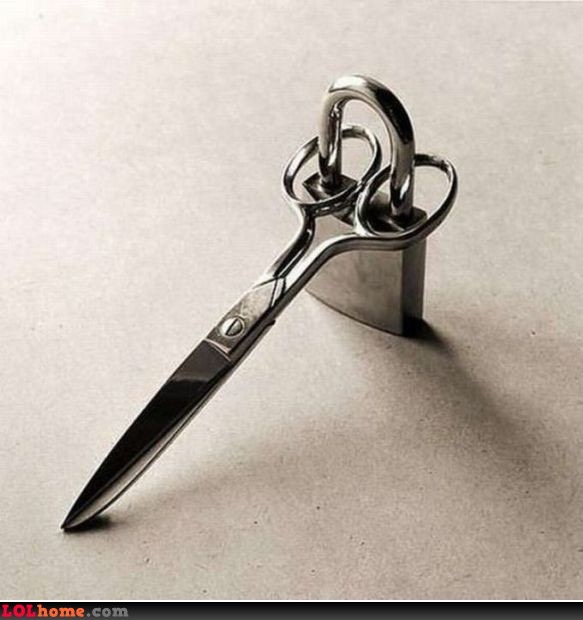
Same with scissors — put them away when not using; if you have people who will take your scissors, get a small padlock or combination lock and lock your scissors closed like this (locking it to your desk is optional.)
Fabric scissors are expensive, they’re expensive to get sharpened, and they don’t work well when someone keeps using them for something that’s not fabric or thread. If other members of your household won’t respect your tools, you have to retrain them.
Speaking of thread? You want a pair of thread snips. They’re very cheap, usually a couple bucks, and don’t bother getting them sharpened if they get dull. Use thread snips to cut off the thread tails at the end of a seam.
And you will need marking utensils. Chalk is fine, get a good brand. The Bohin chalk pens are excellent, last for a long time, and relatively inexpensive. Wax markers are great for dark fabrics, and useless on light colored ones, but on dark fabrics, they’re perfect. And wax tailors’ chalks have a long history, get all three colors. Just remember that ironing will remove wax marks, so if you need them to stay, use the Bohin Chalks, and test every marker on a scrap to make sure it doesn’t stain.
Some people like using Frixion markers that disappear with heat. These have the same problem of disappearing under the iron (though if you put the garment in the freezer, the ink comes back) and they don’t wash out. I’m… not a fan, but I also live in a sometimes cold climate, and I don’t want my buttonhole marks returning because the wind chill dropped.
If you have a fabric that cannot take a mark at all, like velvet, use tailor’s tacks. Thread a needle with contrasting thread, and mark the marks by sewing with BIG stitches along the appropriate lines and dots.
Next up: Where to start with sewing

Be First to Comment