
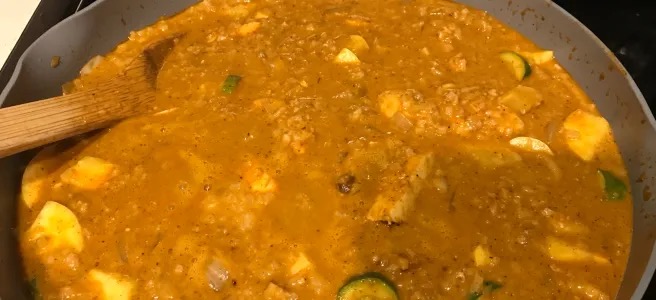
Let’s make soup. These are the Euro-western water-based soups, not cream soups and not blended vegetable soups. Bean soups, several Asian type soups, and fish/shellfish chowders are their own categories.
I have linked to products I like, and they’re available at most grocery stores and ‘zon, but I don’t make any money off the links.
Base material soup:
- In a 6 or 8 quart pot
- Add 2-3 TB of olive oil, butter, or neutral oil, and
- sauté 2 cups of mirepoix (chopped carrots, celery and onion at a 1:1:2 ratio, so in 2 cups, that’s 4 oz carrot and celery each to 8 oz onion) over medium heat
- In the fat until soft/slightly caramelized.
- If using meat, chop into small pieces around 2 cups/1 pound/500 grams, while the mirepoix is cooking.
- Add 2-4 cloves of fresh or frozen garlic and sauté, don’t let it burn. If it burns, you MUST start over.
- Dust meat with flour if wheat is okay, your preferred starch if not, add a little more fat if you need it, add the meat and let it brown. You want some brown crunchy/crusty bits (hereafter known as BCBs, with credit to Sir Pterry).
- When meat is cooked, first add 1 cup of liquid and stir around to release any stuck-on BCBs, then add another ~5 cups broth/water + bouillon.
- If vegetarian, instead of meat, add 2 cans of drained and rinsed beans — any bean you like. Then immediately add the liquid.
- Reduce heat to simmer.
- Add a bay leaf or a sprinkle of powdered bay leaf (my recommendation, easier than fishing out a spiky leaf), a good pinch of oregano, a few grinds of pepper, and any specific spices, vegetables, or herbs the recipe calls for.
- Base soup is now done until the last hour, simmer very gently — the top surface of the soup barely shimmers and a thread of steam comes off the top. Soup is around 180° F by digital thermometer.
- Taste before serving; allow each person to salt to taste.
Definitions and specifications: I recommend against jarred garlic in soups, because if it’s packed in water, it’s also packed with citric acid, and that imparts an unpleasant, sour flavor that doesn’t play well. If it’s packed in oil, you’re running a botulism risk. Frozen cubes like Target or Didot, or fresh are fine. You CAN DIY your own frozen garlic with a food processor, a bag of peeled garlic from the store, and a small silicone mold, like this one. DIY frozen garlic can be a bit strong smelling, so keep it covered while it’s freezing, and then keep it sealed in a glass mason jar or double bagged in high quality zip-top bags. Powdered is also just fine, just use sparingly to start and add powdered/granulated garlic with the spices, not at the end of the mirepoix.
Better than Bouillon at 1 teaspoon to 1 cup of water is a good liquid starter, or Knorr powdered bouillons, also 1 teaspoon to 1 cup. If you prefer bouillon cubes, the only ones I recommend are Knorr; they’re soft and bigger, with a richer flavor, and they dissolve better than their competitors.
Canned/box broth is okay if that’s what you have, but it’s expensive and not very environmentally friendly for what it is, because packing and shipping water is usually not a good idea. It often lacks flavor, too. For the rest of this tutorial, I’m going to call this liquid broth, regardless of which format. Personally, my go-tos are Knorr Tomato-chicken for anything that using a tomato base because I can’t eat cooked tomatoes in any great quantity, and Better than Boullion Roasted beef, or a spoonful of Marmite or Vegemite if I’m making a strictly vegetarian /vegan soup. Yes, I know there are religious wars about Marmite vs Vegemite. They’re at the civic center on Thursday night at 6:30, bring your own weaponry. I don’t participate. Just know that Marmite/Vegemite both have a very beefy, red umami flavor, so if you want something more chickeny/white, use vegetable broth.
Many soup recipes will call for a can of tomatoes to be added with the broth. Tomatoes cause a lot of heartburn, so if you like tomato flavor but tomatoes don’t like you, the substitution is either Knorr Tomato-Chicken bouillon, or add a tablespoon of tomato paste from a tube with the broth. Tube tomato paste stores great in the fridge, lasts for a long time, and is cost effective while being a great source of umami and color. Or simply skip it if you don’t even like the flavor. Then just up the other savory/umami flavors.
All cans, beans and tomatoes, are 1 pound or 15 oz cans unless otherwise specified.
For chicken soups, you can use raw chicken (boneless skinless thigh is usually best, boneless breast is okay, but it can get kinda sandy-dry) or canned chicken, or leftover rotisserie chicken, and add some thyme to the broth at the simmer. If you use a cooked chicken, it doesn’t need any browning time. About an hour before you serve, add a scant cup of frozen or fresh green beans in small pieces, a half-cup of frozen peas, a half-cup of frozen corn. About 20 minutes before serving, add homemade or packaged or frozen egg noodles. Amish style noodles will make the soup creamier, regular ones will be clearer. You can add matzoh balls, just follow the recipe on the side of the matzoh box. You can also use gnocchiinstead of noodles; just gently pan fry the gnocchi separately until they’re slightly golden and put a few in the bowl before you ladle the soup over them. If you want a wine flavor, use a dry white, and add it early, with the broth, or you can add half a lemon’s juice for that tang and balance.
For chicken tortilla soups, add tomatoes with the broth (or the substitute), and cumin, a 3 oz can of green chiles, one can of rinsed beans (pinto or white), powdered chiles, and extra oregano to taste. (Start with a teaspoon each, let it simmer, taste later, add more if needed.) I like Ancho chile powder and Hatch Green chili powder for tortilla, green chili, and albondigas soups because they’re a lot of flavor for a modest heat budget. You can sub a cup of beer for a cup of broth if that’s a flavor you like. At the last hour, add a chopped zucchini, 3/4 cup of frozen corn, a diced fresh chili or two (to your taste — an Anaheim if you’re not looking for heat, a jalapeno or serrano if you want low-medium heat — but if you’re feeding others, let them add their heat with hot sauce). Frozen green beans are also nice if you have some. Serve with tortilla chips, shredded cheese, avocado slices, sour cream, hot sauce.
For green chili, meat can be chicken or pork or planned vegetarian; add cumin, chili powder, oregano, a can of green enchilada sauce, a 3oz can of mild green chiles, a cup of frozen corn, a rinsed can of hominy, and two rinsed cans of white or pinto beans (or 3 cans if vegetarian) with the broth. You can opt to add a diced zucchini at the last hour. Serve with tortilla chips, cheese, avocado, sour cream, hot sauce.
For albondigas (mexican meatball soup), you use meatballs instead of whatever meat — frozen italian meatballs are perfectly fine. The spices are cumin and the milder chili pepper powders from above, especially Aleppo chile powder. Add a can of chopped tomatoes including the can liquid when you add the broth. A can of green chiles is nice, but optional. In the last hour before serving, add 1 chopped zucchini, a cup of fresh or frozen green beans, and 1 large potato, scrubbed, peeled optional, and diced.
For beef with barley, to base soup, you add a can of tomatoes, a half-cup of pearled barley, a medium scrubbed, peeled and diced potato, and thyme, oregano, and basil (or Italian seasoning). You can substitute a cup of red wine or dark beer for a cup of the broth. If you can’t tolerate cooked tomatoes, add a tablespoon of tomato paste or substitute half of the beef broth with Tomato-chicken. You can also add a couple shakes of soy sauce, Worchestershire sauce, or a spoonful of A-1 if you have it. At the last hour, add 3/4 cup of frozen green beans and frozen corn. At the last 10 minutes, add 3/4 cup of frozen peas. Serve with crusty bread and butter.
For minestrone, plan on a vegetable or tomato-chicken broth, and use white cannellini beans as the protein. Add 3 rinsed cans of beans with the broth. At the last hour, add a diced zucchini, 3/4 cup green beans, a handful of shredded cabbage or kale, some chopped italian parsley if you have it. (If you’ve got small amounts of frozen or leftover vegetables, most can go in at this time. Not tender greens and nothing really stinky or overwhelming; mushrooms are nice.) At 20 minutes before serving, add about 1 cup of small pasta (soup shells or ditalini sized) and raise the heat from a gentle simmer (the top of the liquid shimmers a bit and there’s a little steam) to a gentle boil (the top of the liquid bubbles a little, and there’s more steam). Serve with crusty bread and good olive oil for dipping, or butter.
Pistou is minestrone with some pesto added to the broth. You can experiment with the flavor (if you’re not sure if you’ll like it) by stirring a spoon full of prepared pesto into a bowl of minestrone.
To make Italian wedding soup, you begin to make soup as for chicken, but substitute frozen meatballs for chicken. Use chicken broth, and add roughly torn spinach, kale or escarole at the end, along with small pasta like orzo or ditalini. Mini meatballs, if you can find them, work very nicely. Add parmesan at the end, serve with breadsticks.
Pasta e ceci soup is minestrone with chickpeas instead of canellini beans, and add some chili pepper. For this, Penzey’s Aleppo pepper with some Tuscan Sunset or Pasta Sprinkle as the herb mix works perfectly.
This is the method, the ingredients are up to you.
Have a shopping list:

Be First to Comment