
So you want to learn to sew? Well, do you have a machine?
If you have a machine, great! If you don’t, go to my select a machine post and figure out what works best for you. If that’s not enough, ping me and we’ll set something up.
So you want to learn to sew? Well, do you have a machine?
If you have a machine, great! If you don’t, go to my select a machine post and figure out what works best for you. If that’s not enough, ping me and we’ll set something up.
The machine and cabinet are only about half of sewing. It really is fabric origami with occasional thread staples.
Sewing is not mostly sewing — it’s primarily cutting, fitting, and pressing. And yes, pressing is absolutely necessary. Don’t be younger me who thought pressing everything was being persnickety and fussy. It is persnickety, the same way that the difference between a crepe and a pancake is persnickety attention to detail. Pressing a seam sets the thread (makes it part of the fabric of the garment) and that stabilizes the seam.
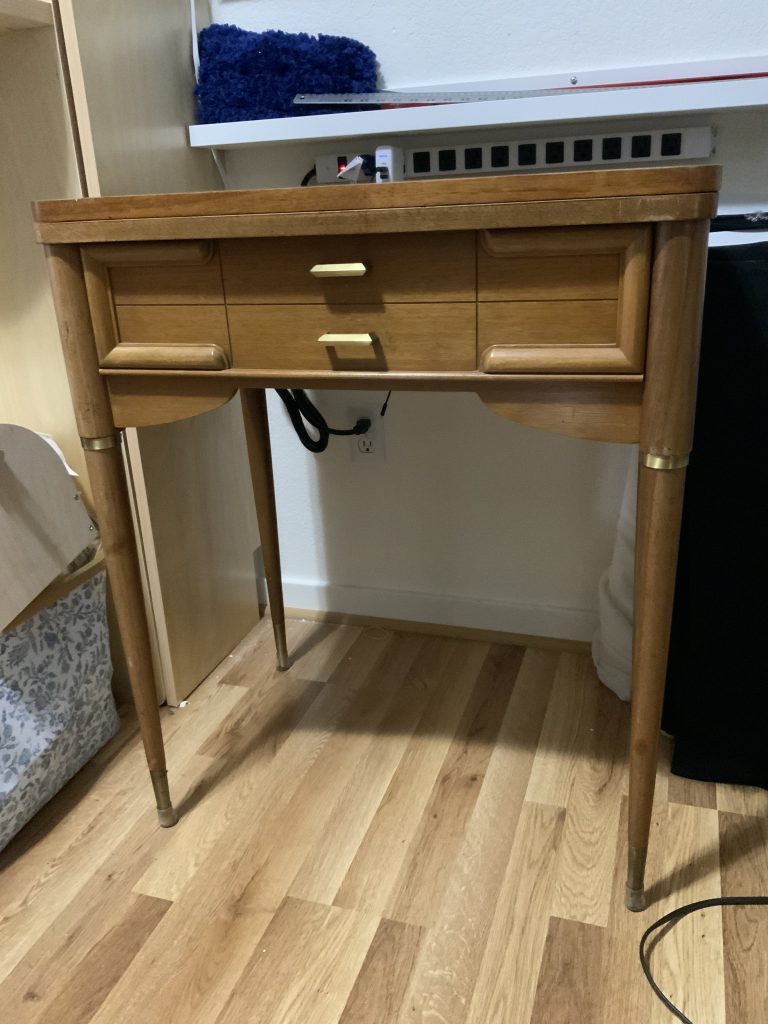
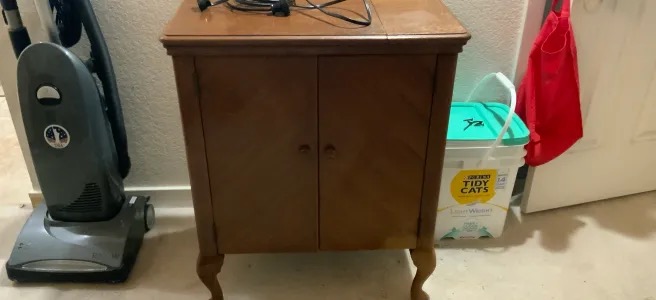
That mid-mod cabinet that I got a couple months ago is now retiring to a life as a desk or entry table for a Mid-Mod enthusiast. Singer switched to using some particle board in the late 50s/early 60s, with both veneer & Formica (easier care) on the table tops.
I’ve been asked at least a good dozen times either how to select a sewing machine, or what machine I’d recommend, and it’s not as simple as “buy the Sewmatic 7000 with the extra coffee unit” (though if any machine EVER has a coffee unit, consider it!).
A Babylock Ellegante is a former top of the line sewing-embroidery machine. I think it debuted around 2008, and apparently, it was… well, it was First of Its Name, and some people thought it was lemony.
I bought mine used in 2015, and I admit there are times it has behaved oddly. Most of these have actually been user error, when I finally figured out what was happening. But it’s no worse behaved than most machines I’ve owned.