
That mid-mod cabinet that I got a couple months ago is now retiring to a life as a desk or entry table for a Mid-Mod enthusiast. Singer switched to using some particle board in the late 50s/early 60s, with both veneer & Formica (easier care) on the table tops.
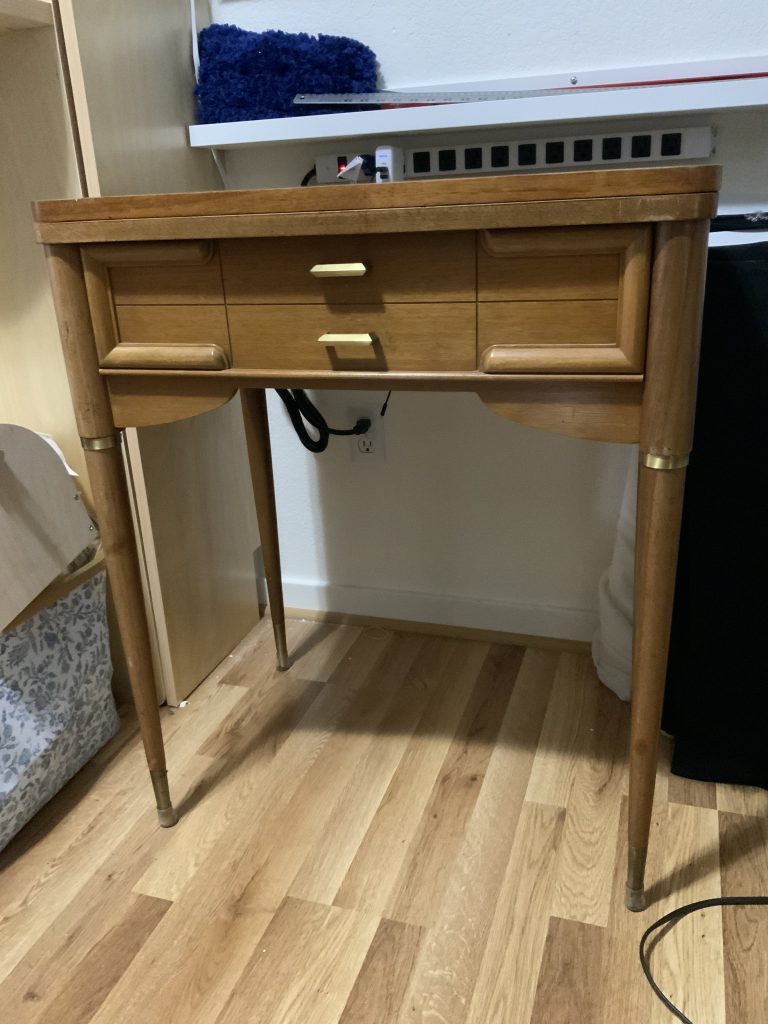
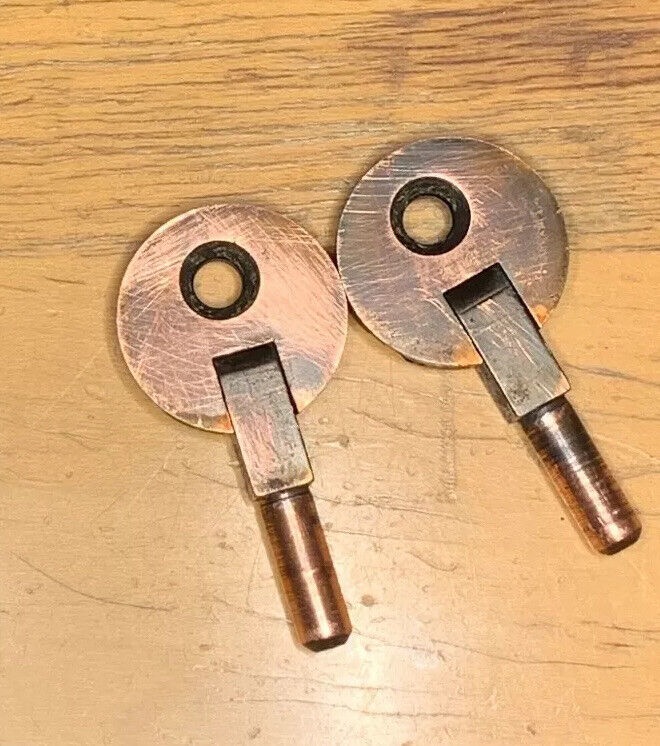
But 70 year old particle board is done hanging onto the screws for the lollipop hinges. Even after stabilizing with super glue and nail polymer (it’s a real thing for stressed wood) I can’t get the screws stable enough for my taste. So I’ll fill the lollipop holes and cut an insert for the machine hole. The table is still solid, it’s just not a good idea to hang 20 pounds of sewing machine off hinges that maybe aren’t totally down with staying put.
It’s still a pretty piece of furniture (if you like MCM, which I’m… indifferent & unenthusiastic about), it’s just not as excellent as the walnut/mahogany/oak veneer over disgustingly well stabilized gumwood ply that was Singer’s 1870s to early 1950s cabinetry practice.
BUT… of course there are always more cabinets and machines in need of homes than there are homes, so I bought an excellent 1950 desk cabinet with the coolest floor pedal that retracts into the case when not in use. (No chasing the foot pedal!) It’s in great shape, needs a little wax & cleaning.
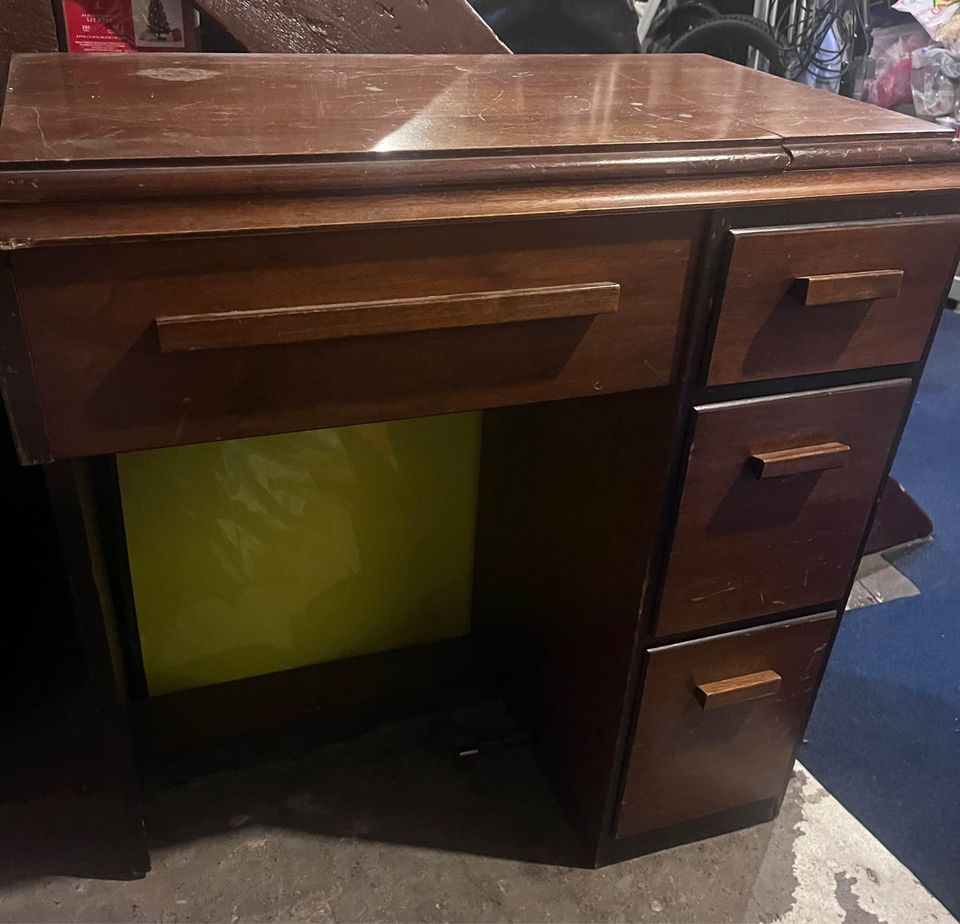
The machine head is meh — a 66, I have 2 already (one is the emergency handcrank), this one needs wiring but the body is excellent, so I’ll make the Godzilla finish one prove it deserves to stay part of the team — but the 403 will look stunning in the new cabinet. And of course it came with a goodie bag of the previous owner’s stuff — another zigzagger, another buttonholer, most of the standard feet and only one ruffler, a pair of delicate old scissors I’ll be taking to McGuckin for sharpening, one of the (very new!) oil bottles I really like, and the manual. The lead tube of 1950s grease has been disposed of.
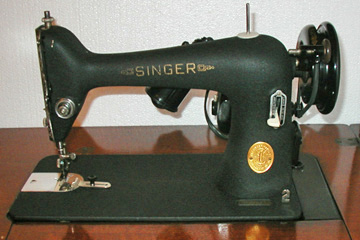
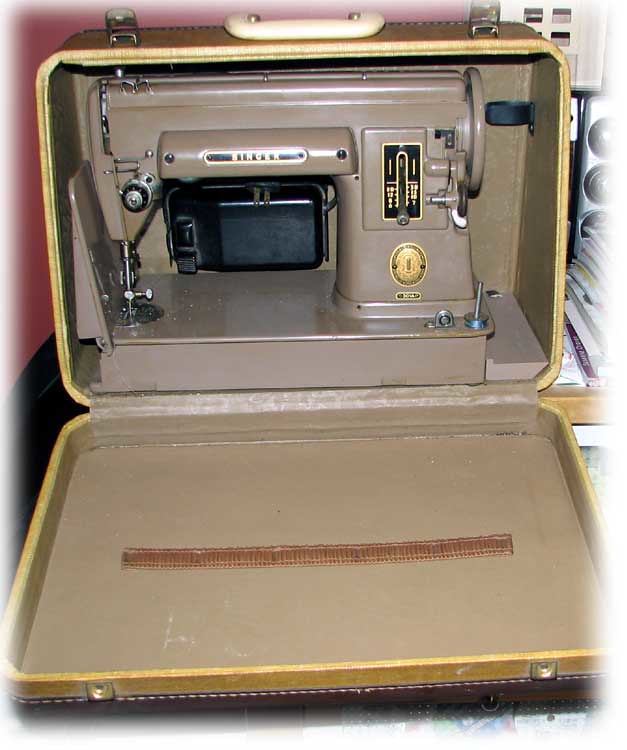
Okay, now the stable is complete. The 66 that survives the thunderdome gets this 40 case — (later addendum, it ended up getting the 301 and its cradle)
— and the 201
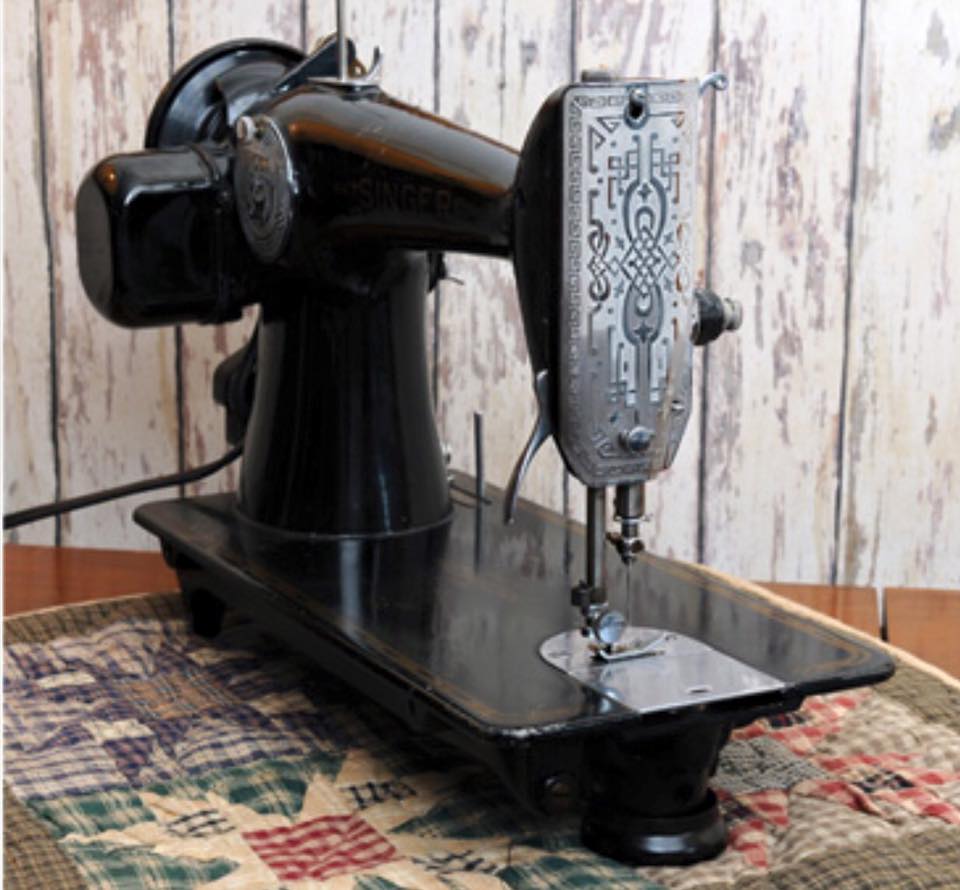
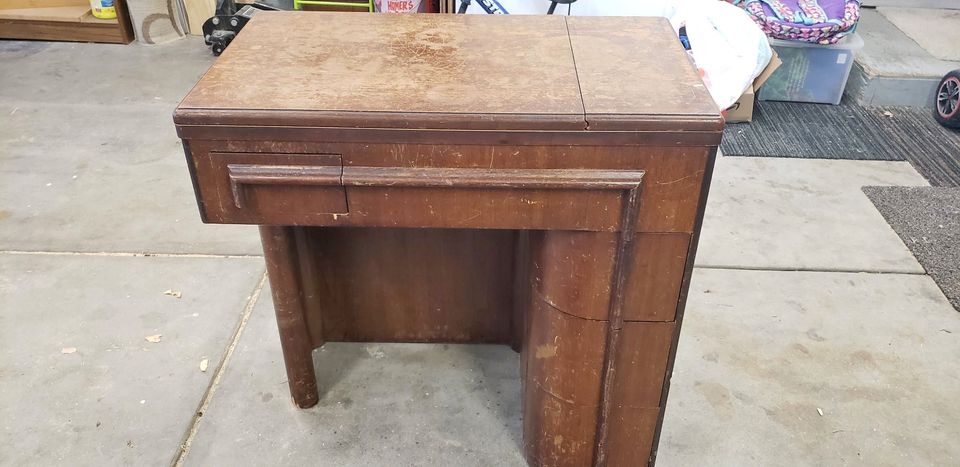
gets the 42 (the art deco case) when it is finished,
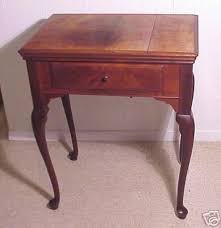
the 301 gets the Queen Anne cabinet,
and the 403 gets this new cabinet.
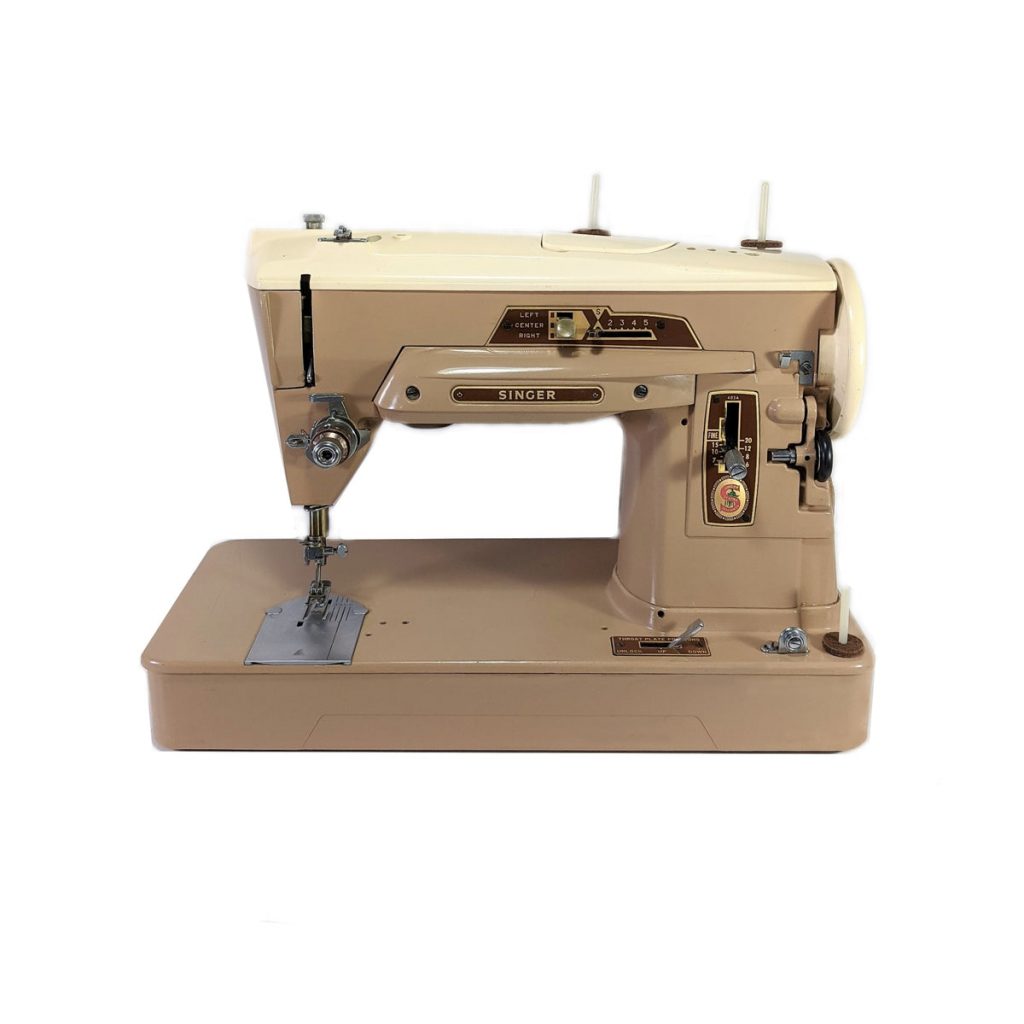
I plan to install another one of the retractable pedals in the 42 Art Deco case and better designed knee levers in the 40 and the Queen Anne(because the Singer knee lever version uses the regular pedal, and is intended to be used either on the floor or with the lever, but the enabling kludge for that puts the lever in an uncomfortable position, usually the center of the knee hole, for anyone over about 87 pounds and 4’6” tall).
Which all means: NO MORE CHASING A FOOT PEDAL ALL OVER THE FLOOR. Ever. (My modern robots have start-stop buttons, I have never once used a foot pedal with them. Their foot pedals are still in their shipping bags.)
Spoke too soon. The coverstitch machine has a pedal. (But maybe not for long…)
The whole point of this exercise?
I wanted a machine I could make a dedicated buttonholer (the 66) because messing with the tension for buttonholes is a lot of messing. I wanted a dead straight straight stitch (the 201) for 95% of my garment construction and general sewing, a full-sized portable so I can do social sewing (The 301) (if that ever becomes possible again) and a zig-zag (the 403) for knits and decorative stuff, and I wanted them all to be machines that a) I can service and b) run quiet.
Because my giant embroidery + sewing robot (the Babylock Ellegante) isn’t going to be repairable much longer. There are parts that I don’t need yet, but I can’t get. The mainboard has already been replaced once; it might not be possible again. It’s a 2005 machine, the software that came with it doesn’t even run anymore because it was written for 32 bit and it doesn’t translate. When the last of my under 2gb thumb drives dies or gets lost, I will not be able to load patterns to it, because nobody makes such tiny USB drives anymore, it only has a USB port, and it mostly does not recognize SD cards in adapters (I have 2 that work.). Not many people are using a 20 year old computer, and that’s exactly what the Ellegante is — a 20 year old computer that happens to be the thread stapler for fabric origami. If I stay on top of the boot loop problem, I may have another decade… assuming nothing changes dramatically in computing, or it doesn’t get hit with a lightning surge at an inopportune moment.
I’m pretty sure that my very vintage netbook that runs Windows XP (and NEVER GOES ON LINE – it exists in my house to convert Palm documents and ebooks into modern documents, and also to support my collection of Palm/Handspring/Sony PDAs) could still run the Babylock’s software… but that machine is equally fragile.
While the 1930s-40s-50s sewing machines above — the 66, the 201, the 301 — are still going strong and only really need oil and grease and some new wires every 65 years.
You know how The Onion is going back to print? Because print is more reliable and is unlikely to fail because of a bad software update? And how it monetizes its reality in a way that prevents a lot of data mining and absolutely thwarts large language models scraping The Onion’s intellectual property? Because using appropriate tech is how we combat enshittification and preserve the things we love against the rapacious and very stupid actions of SilVal’s fascists?
That’s vintage and antique sewing machines for me. Modern sewing hardware started being enshittified BY SINGER back in the mid-1960s, and that change is why newer than 1963 Singers have a terrible reputation and if you’re looking, don’t bother. Singer lost its focus, spent a hell of a lot of money on some profitable side businesses (especially Military Industrial Complex services), and some that weren’t. By the 70s, they were more interested in aerospace and other consumer electronics like stereos than their core business.
Singer was hit with a hostile takeover in the 80s, and after that happened, they got divided up, sold for parts, loaded up with debt, and shoved into bankruptcy. Their first hundred years of making a sewing machine that you can pass onto a 5th generation just wasn’t profitable enough to MBAs in the 1980s. A machine that lasts — and does have a long tail of maintenance and repair costs, and a loyal customer base that will generally buy when they’re in the shop — simply doesn’t generate the repeat, big ticket customers that satisfy Line Go Up dipshits.
There will be an Onion archive in 100 years.
There will not be a Comedy Central archive, or a Netflix archive, or anything that exists on venture capital.
There will 100% be Singer sewing machines made between 1851 and 1962 sewing in 100 years. There will not be a Singer made between 1980 and 2050 sewing in 100 years.
This has been a lesson in capitalism.

Be First to Comment